
Highlight
WWDC26 is a free week-long online event centered on technology, creativity, and community. Apple has replaced traditional 1-on-1 Labs with Group Labs, reducing the chance for deep one-on-one guidance, but giving developers broader answers to common problems by observing high-quality questions from other developers.
Core Ideas
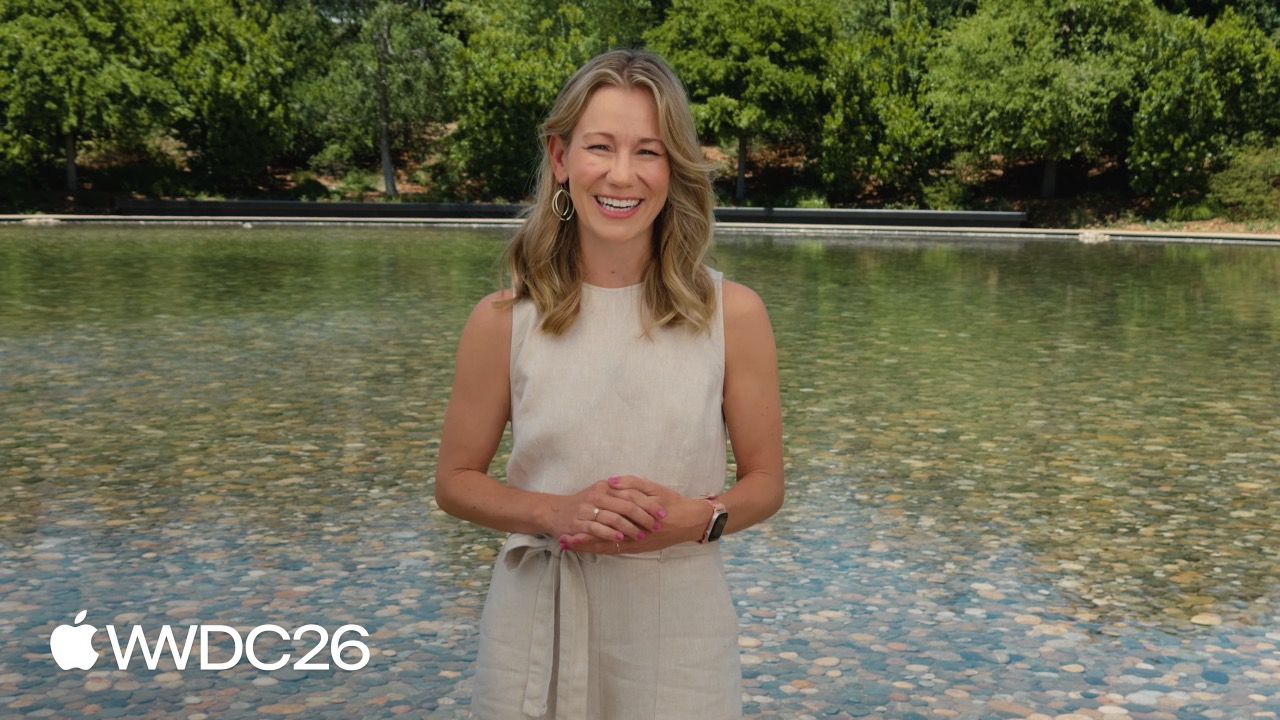
This is a warm-up session with no code, essentially a “how to attend” guide for WWDC26. The video is less than 80 seconds long and has very low information density, but it points out several key arrangements:
- Dates: June 8 through June 12
- Keynote: June 8 at 10:00 a.m. Pacific Time
- Platforms State of the Union: After the Keynote, around 1:00 p.m. Pacific Time
- Format: Fully online and free
- Required tool: Apple Developer app, including new stickers such as Dogcow Clarus
- New interaction format: Group Labs, live Q&A hosted by engineers and designers
- Community channels: Apple Developer Forums and global in-person or online events
- Extras: WWDC26 wallpapers, an Apple Music playlist, and Apple Design Award finalist showcases
Experienced developers who have attended WWDC many times can skip this video. For newcomers, though, it sends an important signal: WWDC’s interaction model has shifted from “engineers help you debug one-on-one” toward “community-driven group Q&A.”
Details
The “Observation” Economics of Group Labs
The most valuable traditional WWDC resource was 1-on-1 Labs, where developers could sit down with Apple engineers to review crash logs or discuss architecture issues. The newly emphasized Group Labs are live Q&A sessions hosted by engineers and designers. One engineer can only debug one person’s issue in an hour, but a Group Lab can answer common questions for hundreds of people at once.
The trade-off is clear: it is harder to get deep guidance for your own project’s specific architecture, but you can hear the unusually sharp questions other developers ask. In Group Labs, learning how to listen is just as important as learning how to ask. Post your questions to Apple Developer Forums ahead of time; if they gain traction, the probability that an engineer answers them directly in a Lab increases significantly.
The Personalization Trap in the Apple Developer App
The video mentions that the app provides “personalized recommendations.” That is standard in the algorithmic era, but during WWDC it is a double-edged sword. If you usually watch only SwiftUI content, the app may stop recommending sessions about Metal or Core ML.
The real value of WWDC often comes from crossing boundaries. Recommendation: deliberately bookmark a few completely unfamiliar tracks in the app, such as watchOS or low-level visionOS optimization, to break the recommendation bubble. After watching SOTU, do not rely only on the recommended list. Browse the catalog by Track directly, and you may find an obscure API that solves a bottleneck in your current project.
Precise Timing
- June 8, 10:00 a.m. PT: Keynote, for product announcements and new OS previews
- June 8, 1:00 p.m. PT: Platforms State of the Union, for the APIs and new frameworks developers care about most
- June 8-12: More than 100 sessions will be released, and Group Labs require advance registration
- Throughout the week: Apple Developer Forums remain active
The Practical Value of Community Participation
The video repeatedly emphasizes “Find your community,” and that is not empty phrasing. During WWDC, developers around the world organize in-person watch parties and online discussion groups. These unofficial channels are often better at solving practical problems than the official sessions, because participants use the same technology stacks and have hit the same issues.
Key Takeaways
-
Register for Group Labs early and prepare questions Group Labs have limited capacity and require advance registration on the Apple Developer website. Before registering, post specific questions to Developer Forums to build visibility; engineers tend to prioritize highly upvoted forum questions. Questions should be concrete and include code snippets, because vague questions rarely get useful answers.
-
Manually break the app’s information bubble Personalized recommendations in the Apple Developer app can filter out Tracks you rarely watch. After SOTU, intentionally browse the full catalog by Track instead of only watching the recommended list. Every year, APIs that solve real project bottlenecks often hide in seemingly unrelated Tracks.
-
Create a WWDC note-taking workflow Group Labs are a form of observational learning, with dense information and no replay. Prepare a real-time note-taking system, such as Notes, SwiftData, or simple Markdown files, to record bug numbers, API deprecation details, and best practices mentioned by engineers. Real-time notes are the only reliable way to retrieve this information later.
-
Sync key times to the system calendar Keynote and SOTU occur at inconvenient local hours for developers in China, with 10:00 a.m. PT landing at 1:00 a.m. Beijing time the next day. Add key events to the system calendar with early reminders; that is more reliable than memory.
-
Pay attention to Apple Design Award finalists The finalists mentioned in the video are an annual textbook for app design and motion. Download these apps and study their interaction details, especially accessibility and animation handling; this often teaches more practical design lessons than watching a session.
Related Sessions
- Keynote — Product announcements and new OS previews, useful for understanding this year’s platform direction
- Platforms State of the Union — Core developer content, with concentrated introductions to new APIs and frameworks
- Apple Design Awards — Design analysis of the year’s best apps and games, a practical reference for motion and interaction
- What’s new in SwiftUI — A must-watch framework update after SOTU, covering the latest UI-layer capabilities
- Meet the SwiftUI team for Q&A — A typical Group Labs example; register early to join the live Q&A with engineers
Comments
GitHub Issues · utterances