
Highlight
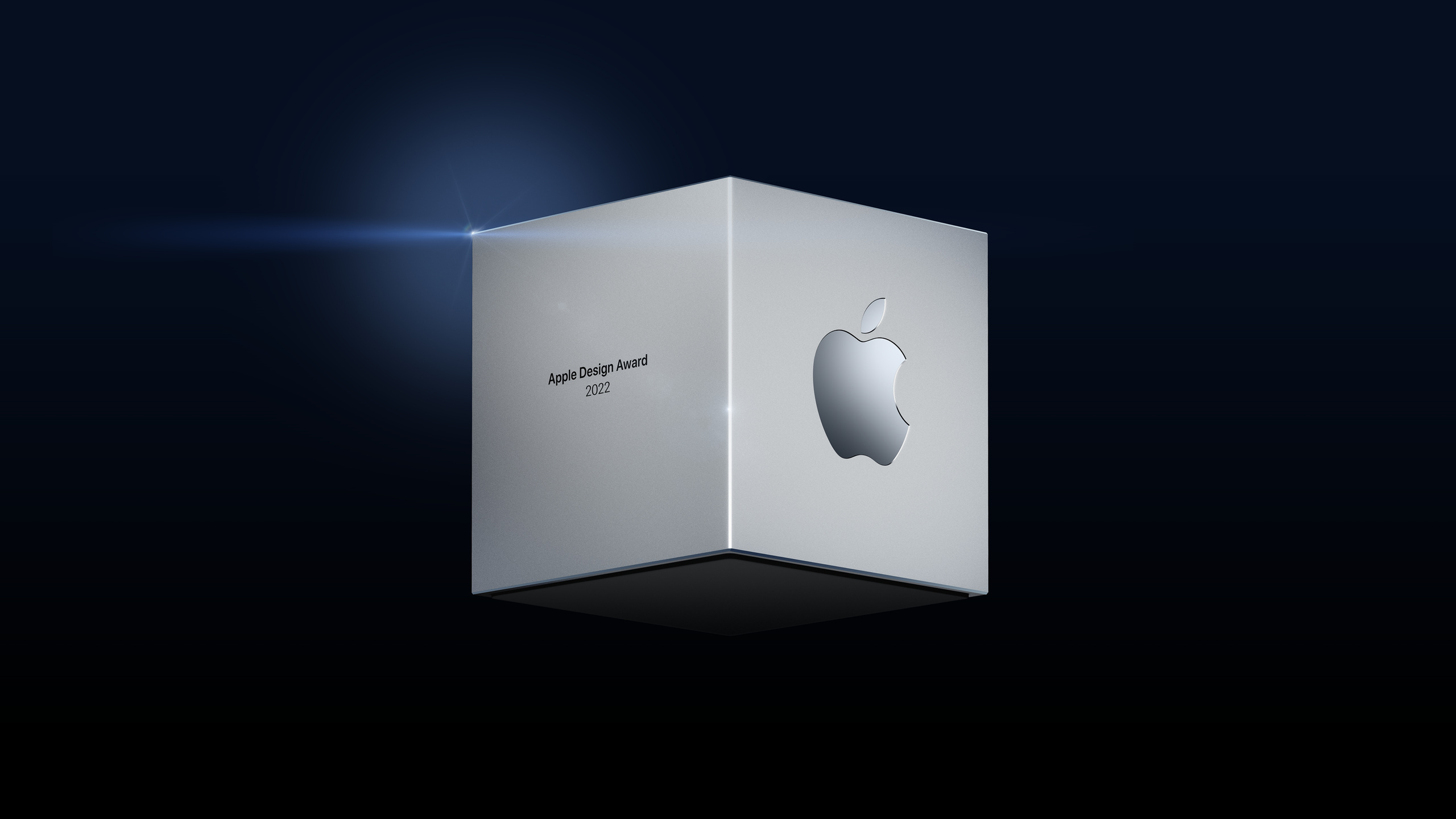
The 2022 Apple Design Awards announced 12 winning apps and games, covering six categories: inclusivity, pleasure and fun, interaction, social impact, visuals and graphics, and innovation. The design stories of the winners reveal the common characteristics of excellent designs: starting from real needs and finding a balance between functionality and beauty.
Core Content
Inclusivity
Award-winning apps Letter Rooms and Noted. demonstrate how to make it accessible to users of all abilities. Letter Rooms helps users with dyslexia learn to spell through a simple interface and spoken feedback. (02:45) Noted. Synchronize audio notes with text so users with limited hearing can understand content visually.
What these apps have in common: They are designed with accessibility features as part of the core experience, not as an afterthought.
Delight and Fun
Overboard! and (Not Boring) Habits use gamification to make everyday tasks fun. Overboard! Puts detective reasoning on a ship. Players have to find the murderer within a limited time. Each time you play, you will have a different experience. (05:20) (Not Boring) Habits uses exquisite 3D animation and tactile feedback to make the process of forming habits as rewarding as playing a game.
Interaction
Vectornator and Slopes redefine interaction standards in their respective fields. Vectornator brings professional vector design tools to iPad, replacing complex menu hierarchies with gestures. (08:10) Slopes uses sensor data from Apple Watch to automatically identify skiing movements, so users don’t need to manually record any information.
###Social Impact
Rebel Girls and Headspace use design to drive positive social change. Rebel Girls introduces children to remarkable women in history through interactive stories, each beautifully illustrated and voiced. (11:00) Headspace uses gentle visual language and guided breathing animations to help users establish a meditation habit.
###Visuals and Graphics
Genshin Impact and Halide Mark II showcase the limits of visuals on mobile devices. Genshin Impact uses an open world and cross-platform online to prove that mobile games can achieve console-level graphics quality. (14:30) Halide Mark II makes the control interface of a professional camera both powerful and intuitive, with smooth animation feedback for manual focus and exposure adjustments.
Innovation
Odio and Widgetsmith open up new possibilities in technical implementation. Odio uses spatial audio technology to turn ambient sound into an immersive 3D sound field. Users can “walk” in the city and listen to different sound landscapes. (17:50) Widgetsmith allows users to customize the appearance and content of iOS home screen widgets, driving a wave of personalization in the entire widget ecosystem.
Detailed Content
Common traits of designers
Developer interviews in the video reveal some recurring themes: (01:00)
- Inspiration from life: Many developers mentioned getting inspiration from nature, cities, and daily observations
- Failure is part of the process: Almost every team has experienced the moment of cutting off core functionality and starting from scratch.
- Simplification is harder than complexity: Making complex functions simple requires repeated iterations and trade-offs.
- Design is self-expression: code and interface are the medium through which developers express their ideas
Technology selection serves experience
The technology decisions of award-winning applications all have one thing in common: technology choices serve specific problems, not show off their skills.
Slopes uses fused data from Core Location and Core Motion to automatically detect a skier’s lift and run status. (09:30) Users do not need to press any buttons, and the application automatically records the time, speed, and height difference of each slide.
Vectornator has made a lot of gesture optimizations for Apple Pencil, including two-finger rotation of the canvas, three-finger undo, and Apple Pencil double-click to switch tools. These interactions make vector design efficiency on iPad close to that of desktop software. (08:45)
Localization and Globalization
Genshin Impact supports full voice acting and text in 13 languages, and character designs incorporate elements from multiple cultures. This global content strategy has made it successful in multiple countries and regions. (15:10)
Core Takeaways
1. Solve your own pain points
The developer of Slopes was a ski enthusiast himself, and he wanted a ski tracking app that didn’t require manual recording. The founder of Headspace discovered meditation in college and found that there were no good digital tools to help beginners get started. Starting from your own real needs, it is easier to create in-depth products.
2. Treat accessibility as a design constraint
The design constraint of Letter Rooms is “to enable independent learning for children with dyslexia”. This constraint drives design decisions such as simple interfaces, large buttons, and voice feedback. Limitations sometimes inspire better ideas.
3. Use animation to convey emotions
(Not Boring) Habits Each habit check-in has unique 3D animation and tactile feedback. The Halide’s manual focus ring has a finely simulated damping feel. These details make users feel “carefully designed” and establish an emotional connection.
4. Explore new uses for sensors
Slopes automatically recognizes skiing conditions, and Odio uses head tracking to change the direction of the sound field. The sensor capabilities of Apple devices are always expanding. Think about which sensor data is not fully utilized in your application scenarios.
Related Sessions
- What’s new in iPad app design — The latest update to iPad app design, including multi-windows and keyboard shortcuts
- Design App Shortcuts — Learn how to design quality Shortcuts for your app
- Design great actions for Shortcuts — Design best practices for Shortcuts Action
- Design principles for spatial user interfaces — Design principles for spatial user interfaces
Comments
GitHub Issues · utterances