
Highlight
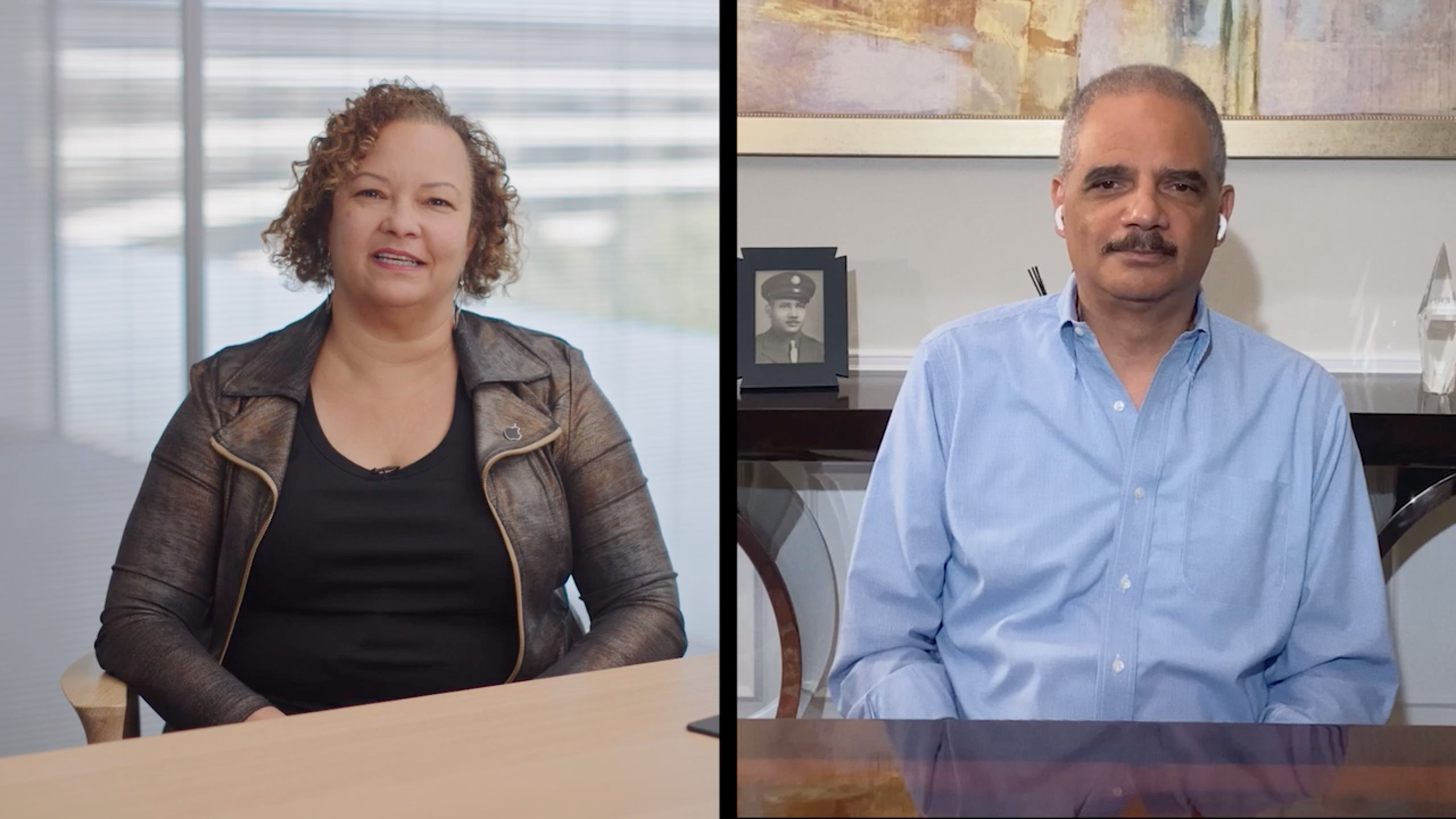
Lisa Jackson invites Eric Holder to discuss race in America at WWDC 2020, and clearly connects the day-to-day work of developers to the specific responsibilities of data curation, information sharing, social oversight, and accessibility opportunities.
Core Content
The general context of WWDC is frameworks, tools, and platform capabilities. This conversation changed the entrance: Lisa Jackson first introduced Eric Holder’s judicial experience, and then put the issue into the racial awakening taking place in the United States in 2020. Holder said the killing of George Floyd and the subsequent videos have led to more conversations about the criminal justice system and the situation of people of color in the United States.
This is directly related to the daily judgment of developers. Jackson ended by taking the question directly to the tech community: Many Apple employees and developers want to know how they can help. Holder’s answer was very specific. He mentioned that developers are good at aggregating data, processing data, sharing information, and making complex things more accessible.
This session therefore provides a product judgment standard: if an app can organize information, expose opportunities, and help people monitor social operations, it may participate in larger public issues. Developers need to factor this influence into the early design of requirements, interfaces, and data flows, rather than waiting until the functionality is complete to add a value statement.
Detailed Content
The conversation begins with a historical moment
(01:42) Holder calls the public sentiment at the time a generational racial awakening. He put together the George Floyd incident, the videos seen by the public, and the long-standing racial unease in American society to explain that street actions are driving broader social discussions.
Key points:
- This discussion did not stop at abstract corporate values. The session started from a specific historical moment.
- Holder The scope of the discussion expands from the criminal justice system to the overall situation of people of color in the United States.
- For developers, the social context outside of the product context affects what information and support users actually need.
Discussion must turn to concrete actions
(03:16) Holder reflects on his 2009 remarks about America’s avoidance of the topic of race. Painful and awkward conversations are still necessary, he said, because people need to face history, understand the present and discuss the future.
(04:23) He went on to emphasize that the dialogue is just the beginning, and concrete steps must be formed in the follow-up, including changing policies and setting measures to alleviate the unfairness and injustice that still exist.
Key points:
- The dialogue itself is not enough, the session clearly requires turning the discussion into executable steps.
- This logic can be mapped to product work: discover problems, collect evidence, formulate solutions, and continuously check the impact.
- If the app handles sensitive social information, the design process needs to leave room for user feedback, error correction, and transparency.
Systemic problems will be hidden in daily processes
(07:41) Jackson mentioned Apple’s Racial Equity and Justice Initiative and said Apple will use its platform, voice and resources to challenge systemic racism. Her problem is that many inequalities are hidden in the system and are not necessarily directly visible.
(08:12) Holder illustrates this point with his own experience: He was once stopped by police while running to see a movie in Georgetown, Washington, when he was already a federal prosecutor. He then cited redlining, loan application rejections, silent barriers and glass ceilings in leadership positions.
Key points:
- Inequality is often reflected in the daily mechanisms of forms, reviews, admissions, sorting, and opportunity allocation.
- When developers design flows, check which fields, rules, or defaults make it more difficult for certain users to access the opportunity.
- When dealing with this type of problem, data traceability and interpretability are more important than a beautiful interface.
Environmental issues are also issues of fairness
(14:47) Jackson turned the topic to environmental justice. She noted that communities of color are more vulnerable to impacts from climate change, air quality, water quality and land use decisions.
(15:30) Holder said environmental racism is a life and death issue because polluting facilities, roads and land decisions shorten lives, affect health and limit people’s abilities.
Key points:
- Social equity cuts through justice, housing, education, employment and the environment.
- Apps that serve communities that display locations, risks, or resources should have as a core requirement the ability of affected groups to understand and use this information.
- Information presentation should avoid serving only those who are already familiar with the system.
The direct entrance for developers is information capabilities
(19:53) Jackson finally turned the question over to the technical community: how app developers can help deal with racism in their daily work.
(20:24) Holder’s answer is that developers have the ability to aggregate data, process data, share information, simplify complex problems, and make content accessible to users around the world. He encourages developers to put their creativity into issues related to race and ethnic strife so that people can see opportunities to improve their lives and also monitor what is happening in society.
Key points:
- The task for developers in this dialogue is clear: apply information capabilities to real problems.
- Data compilation, information sharing, cross-border communication and social supervision are the four entrances named in the transcript.
- These portals require product teams to take accuracy, accessibility, privacy, and ongoing maintenance seriously.
Core Takeaways
-
Community Resource Navigation: Organizes legal aid, psychological support, voting registration, community organizations and educational resources into a searchable directory. The reason it’s worth doing is that Holder explicitly mentioned that developers can make people see opportunities to improve their lives. Start by defining the source, update time, locale and accessible text, then let users filter by location and needs.
-
Public Data Interpreter: Convert public data related to housing, education, environment or justice into charts and illustrations that ordinary people can understand. The reason it’s worth doing is that sessions repeatedly emphasize that systemic problems are often hidden, and users need to be able to see the rules and results. The way to start is to select a small-scale data set, record the meaning of fields, missing items and data sources, and then make accessible lists, charts and download portals.
-
Community Issue Escalation Process: Allows residents to document specific issues with the environment, traffic, law enforcement or public services and retain time, location, evidence and status. The reason it’s worth doing is that Holder mentioned that social supervision and information sharing are capabilities that developers can contribute. The way to start is to design clear reporting forms, status flows, and privacy reminders, and then decide which content will be displayed publicly.
-
Organizational Equity Checklist: Create a reviewable checklist for your hiring, promotion, customer service, or content review process. The reason it’s worth doing is that the silent barriers and glass ceilings in transcript come from everyday institutions. A good way to start is by laying out the key decision points, documenting the responsible person, input data, criteria and appeals path for each step.
-
Multi-language and Accessible Versions: Provides clear language, speech-assisted and localized versions of public information. The reason it’s worth doing is that Holder lists simplifying complex things and making information accessible to users around the world as a developer advantage. Start by auditing core information for reading difficulty, visual contrast, assistive technology labeling, and translation coverage.
Related Sessions
- Make your app visually accessible — Start with color, text, and visual settings to make your interface accessible to more users.
- Create a seamless speech experience in your apps — Supplement assistive technology with speech synthesis to make messages heard.
- VoiceOver efficiency with custom rotors — Design VoiceOver navigation paths for complex interfaces to reduce information search costs.
- Formatters: Make data human-friendly — Format dates, numbers, names, and lists into human-friendly content.
- Swift packages: Resources and localization — Organize resources and localization strings in Swift packages to let your code serve more locales.
Comments
GitHub Issues · utterances